




Mission Statement
To further, in every way, interest in gardening and kindred subjects and to cooperate with all programs for the improvement in planting, conservation, environment and beautification of our island.
The Club supports many outreach programs, local environmental organizations, scholarship programs and services through the monies raised by our annual Holiday Tour of Homes and our June Outdoor Living Garden Tour. Professional speakers present programs throughout the year on floral design, horticulture, environmental issues and garden related topics. Membership meetings are held the second Thursday of every month, September through May excluding December.
You can also follow us on  Facebook or
  Instagram
SAVE THE DATE – Garden Club of LBI’s Outdoor Living Garden Tour and Art Show
Graphic Design by Tracey Cameron
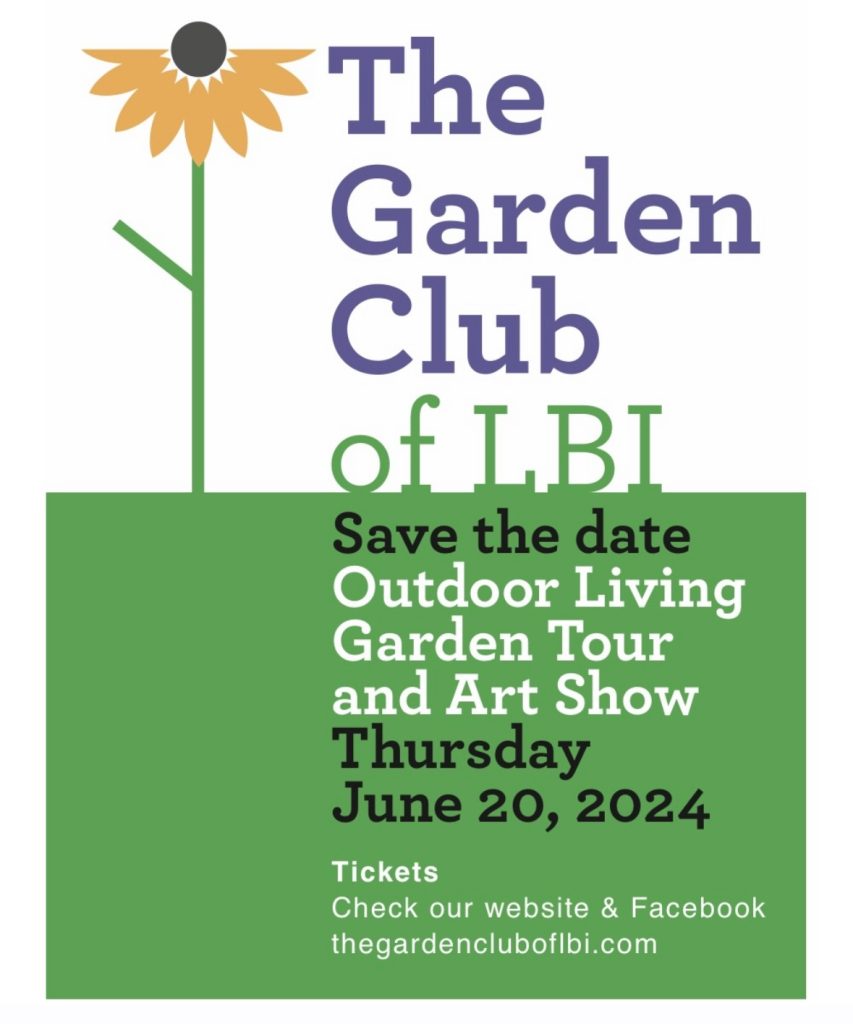
The Garden Club of LBI
OUTDOOR LIVING GARDEN TOUR and ART SHOW
Thursday, June 20, 2024
10 a.m. to 4 p.m.
Rain date Friday, June 21
Ticket sales start on Thursday, May 9th for our 4th Annual Outdoor Living Garden Tour & Art Show. Don’t miss your chance to be a part of this amazing event!
Featuring vegetable and floral gardens with educational set-ups, outdoor leisure pools, decks and kitchens, Plein Air Artists painting live, table scapes and pop-up vendors from local stores at each location. Our tour promises to be a visually stunning and enjoyable day!
As part of this immersive sensory experience, The Garden Club showcases three public gardens meticulously tended to by our members year-round. Be sure to visit the Edith Duff Gwinn Garden, situated adjacent to the Barnegat Light Museum, the Pollinator Garden, located near the Barnegat Light Pavilion and the Beach Haven Library Garden in Beach Haven.
Explore and purchase affordable Green Elephant Sale treasures (gently used garden, floral, and outdoor items), participate in raffles for original artworks by featured artists and prize packages donated by local businesses!
Tickets are $40
Please send your check and a self-addressed envelope to:
Kim Carroll
211 Stratford Avenue
Beach Haven, NJ 08008
For additional ticket information, please contact Kim at:
Michele Farias, Chair
Diana Castle, Co-chair
Outdoor Living Garden Tour & Art Show
Garden Club Welcomes New Members! April 2024
Photo by Debra Resch

President Lois Perry extended a gracious greeting to the new members of The Garden Club of Long Beach Island on Thursday, April 18, 2024. The new members were treated to a wonderful luncheon at Calloway’s in West Creek! Click here to hear more about this celebration!
April Inspired Arrangements! April 2024
Photo by Debra Resch
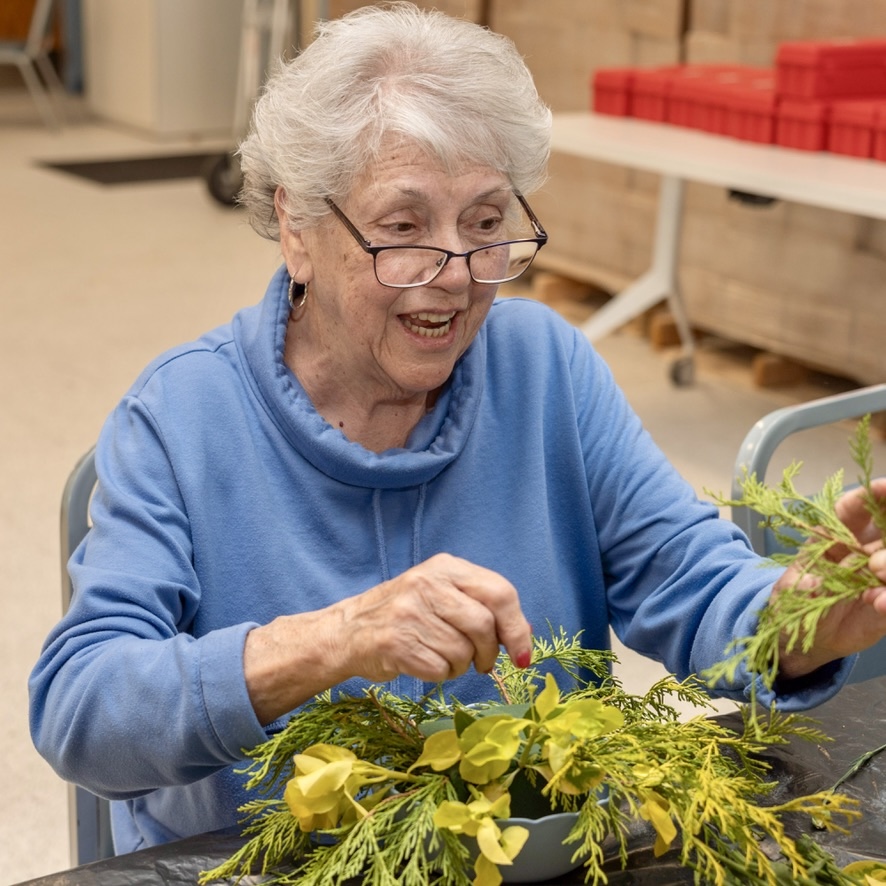
The Meals-on-Wheels joined The Garden Club of LBI and crafted April inspired floral arrangements. Cathy Sutton, Senior Services Chair, orchestrated the day’s activities ensuring that all participants had the opportunity to enjoy another delightful and memorable experience!
To view this special day, please click here!
Past Presidents Acknowledged! April 2024
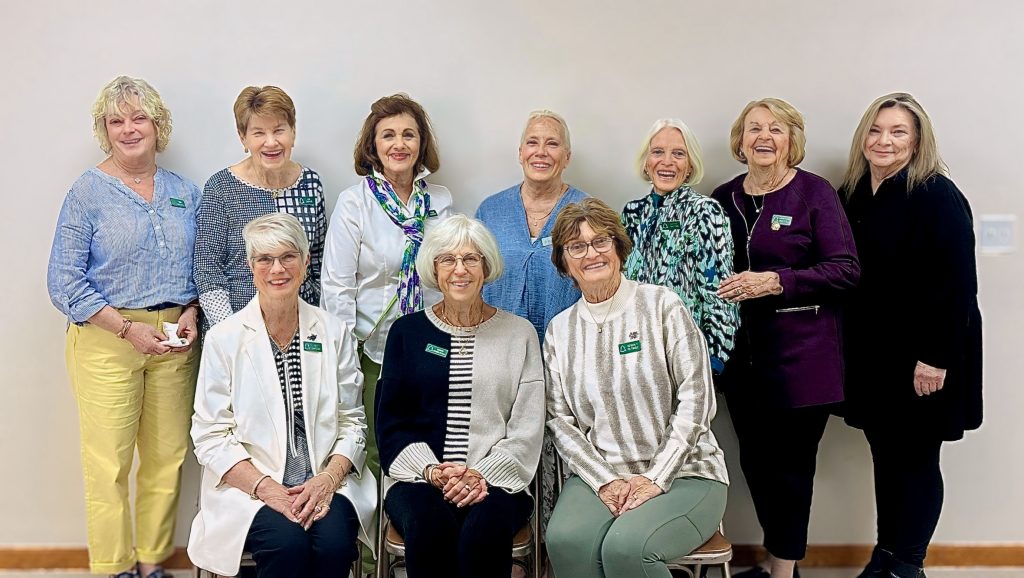
The Garden Club’s Past Presidents were recognized for their commitment and diligence! Each one of them were instrumental in making the Club an outstanding success! Visit our Members Meeting page to learn more!
Spring is in the Air! – March 2024
Photo by Diane Macrides

The Intergenerational Committee of The Garden Club of LBI convened on Tuesday, March 26, 2024, at The Long Beach Island Grade School located in Ship Bottom. Lots of happy faces were noted while fourth grade students assembled their flower arrangements! Click here to explore the children’s masterpieces!
Youth Committee Celebrates Sparkling Spring! – March 2024
Graphic Design by Tracey Cameron/Photo by Jeannette Michelson
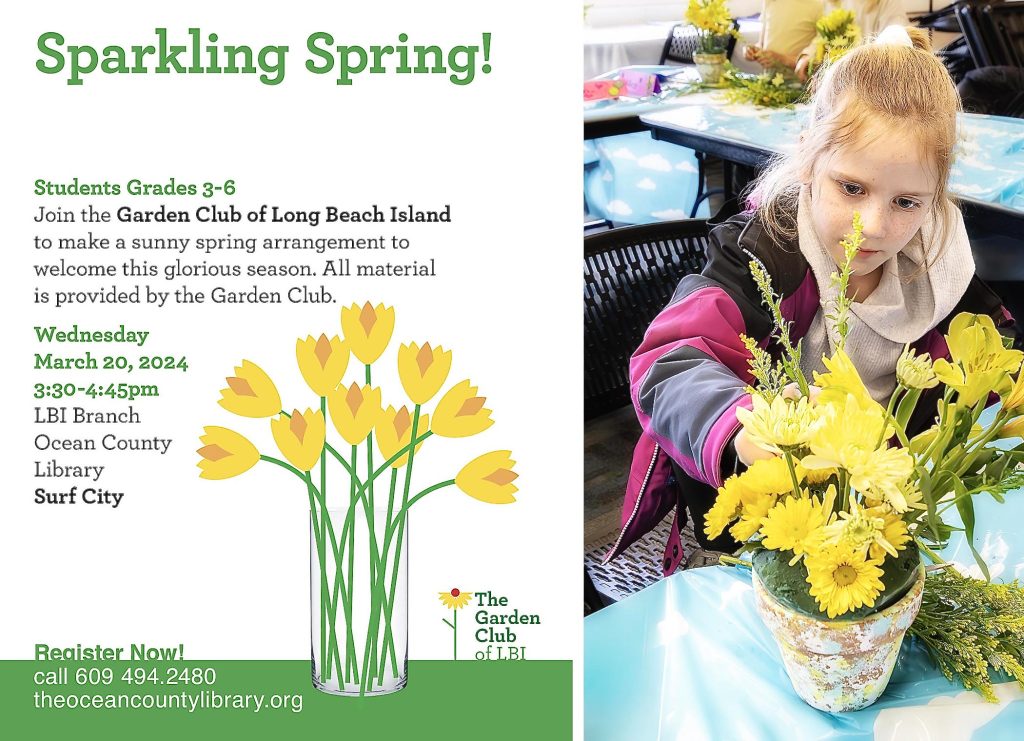
The Youth Committee of The Garden Club of LBI showcased their talent by crafting dazzling spring floral arrangements at the Ocean County Library – LBI Branch in Surf City. The beautiful floral creations were truly a success! Want to learn more about the Garden Club’s Youth Committee? Click here to view!
More News!
Click on the links below for details and photos.
Horticulture – 2024 – Horticulture & Publicity
Workshops- 2022 – 2024 – Workshops
Youth Committee – 2024 – Youth Committee & Publicity
Member Meetings – 2024 – Member Meetings
Senior Services – 2024 – Senior Services & Publicity
Garden Club Wins Award! – 2023 – Awards & Publicity
Garden Club featured in “Echoes of LBI Magazine” – 2023 – Publicity
Nicholas Guerriero Scholarship Winner – 2023 – Scholarships
STATEMENT OF THE GARDEN CLUB OF LONG BEACH ISLAND’S POLICIES
The emblem of The Garden Club of Long Beach Island, New Jersey may not be used or copied in any way or for any purpose other than official application by the Board of Directors. The name of The Garden Club of Long Beach Island, New Jersey shall be used only on awards, publications, programs, etc. authorized by the Board of Directors. The name of The Garden Club of Long Beach Island, New Jersey shall not be used to endorse a candidate for office, product, lecture, tour or organization except as ordered by the Board of Directors. The list of the Board of Directors of The Garden Club of Long Beach Island, New Jersey, their officers and members is not available for distribution to others or for use in advertising purposes, except by special vote of the Board of Directors.
Updated April 2024
.
.
.